
Table of Contents
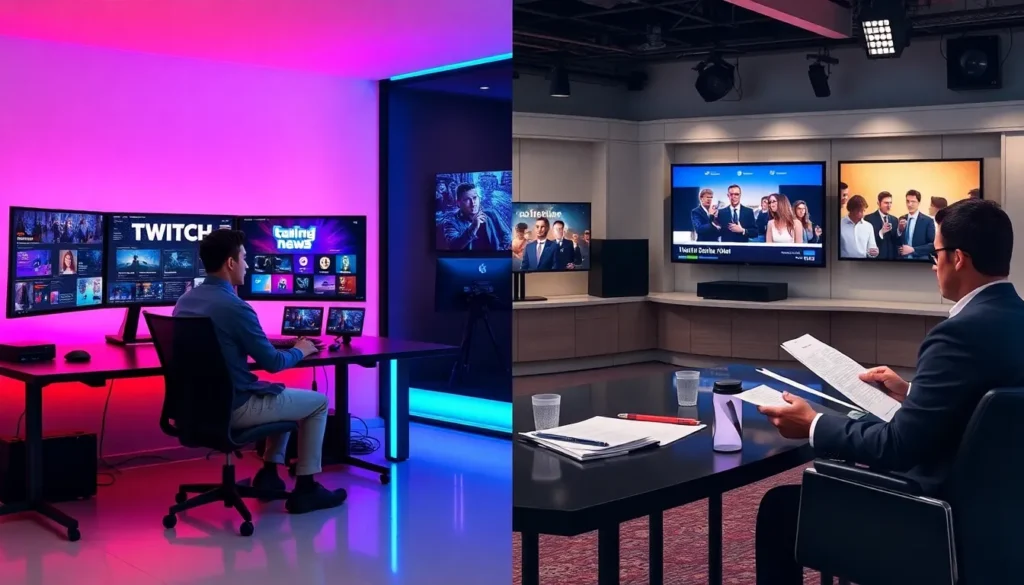
ToggleGaming news vs traditional entertainment news, they’re not the same thing, and the gap between them keeps growing. While both cover stories meant to inform and entertain, the way they operate, the speed at which they move, and the audiences they serve differ significantly. Traditional entertainment news follows established media cycles. Gaming news, on the other hand, lives and breathes in real time, shaped by passionate communities and digital platforms. Understanding these differences helps readers find the coverage that actually matters to them. This article breaks down what separates gaming news from mainstream media, how audiences consume each type differently, and where social platforms fit into the picture.
Key Takeaways
- Gaming news operates in real time with 24/7 coverage, while traditional entertainment news follows slower, scheduled media cycles.
- Community-driven reporting through Reddit, Discord, and dataminers sets gaming news apart from mainstream media’s reliance on official sources.
- Gaming audiences consume news online across multiple platforms, demanding both quick updates and in-depth analysis on their own terms.
- Social media and streaming platforms don’t just distribute gaming news—they actively create it through live content and viral moments.
- Choosing the right source depends on your needs: dedicated gaming outlets for breaking news, specialized channels for analysis, and community forums for game-specific updates.
- Combining traditional entertainment news with gaming-specific sources and social platforms gives you the most complete picture.
What Sets Gaming News Apart From Mainstream Media
Gaming news operates on a fundamentally different model than traditional entertainment coverage. The differences show up in pacing, sourcing, and audience expectations.
Speed and Real-Time Coverage
Traditional entertainment news often follows a slower cycle. Studios announce films months or years in advance. Press releases go out. Journalists write previews. Reviews appear after screenings.
Gaming news doesn’t wait. A developer might shadow-drop a trailer at 2 AM, and within minutes, gaming outlets have published analysis, screenshots, and fan reactions. Patch notes hit servers, and coverage follows immediately. Server outages become breaking news. Leaks spread across forums before official announcements even happen.
This speed shapes everything. Gaming news outlets maintain 24/7 operations because their audience expects instant coverage. A gaming news site that publishes a story six hours late might as well not publish it at all.
Traditional entertainment news can afford patience. A film review published the morning after a premiere still holds value. Gaming news vs entertainment news comes down to this urgency gap.
Community-Driven Reporting
Mainstream media relies heavily on industry insiders, publicists, and official sources. Gaming news pulls from a much wider pool.
Reddit threads break stories. Discord servers surface leaks. Dataminers dig through game files and post findings before companies say a word. Speedrunners discover glitches that become national headlines.
This community involvement changes the relationship between journalists and audiences. Gaming news reporters often come from the communities they cover. They played the same games, posted on the same forums, and understand references that outsiders miss.
Traditional entertainment journalists maintain more professional distance. Gaming news blurs those lines, and readers expect that connection.
How Audiences Consume Gaming News Differently
The way people read gaming news looks nothing like how they consume traditional entertainment coverage.
Mainstream entertainment news reaches audiences through TV segments, magazine features, and newspaper arts sections. People catch celebrity gossip during morning shows or read movie reviews in weekend editions.
Gaming news audiences live online. They check dedicated websites, subscribe to YouTube channels, and scroll through Twitter feeds multiple times daily. Many consume gaming news while actively playing games, watching a stream on one monitor while grinding in-game on another.
Attention spans differ too. Traditional entertainment news can afford long-form profiles and in-depth features. Gaming news audiences want quick hits. Patch notes summaries. Tier lists. Release date confirmations. The information needs to be scannable.
But here’s where it gets interesting: gaming audiences also demand depth when they want it. A 45-minute video essay analyzing game design philosophy can pull millions of views. A detailed breakdown of frame data in a fighting game finds its audience.
Gaming news vs traditional coverage isn’t about attention spans. It’s about control. Gaming audiences choose when they want quick updates and when they want deep dives. Traditional media makes that choice for them.
Age demographics play a role. Gaming news audiences skew younger and more digitally native. They grew up with content on demand. Waiting for a weekly TV segment feels foreign to them.
The Role of Social Media and Streaming Platforms
Social media doesn’t just distribute gaming news, it creates gaming news.
When a streamer with millions of followers plays a new game, that becomes a story. When a developer tweets something controversial, gaming news outlets cover it within the hour. When fans organize boycotts or petitions through social platforms, those movements become headlines.
Traditional entertainment news uses social media as a distribution channel. Gaming news treats it as both source and destination.
Twitch streams serve as live news broadcasts. A developer playing their own game and answering questions generates more newsworthy content than a formal press release. YouTube videos function as both news coverage and primary sources. Twitter threads break stories that traditional journalists then aggregate.
This creates a unique ecosystem. Gaming news vs mainstream entertainment coverage differs because the platforms themselves shape what counts as news.
Streaming platforms also changed who delivers gaming news. Individual creators often break stories before outlets. A YouTuber with inside sources might publish leaked information that larger sites then confirm and expand upon.
The line between content creator and journalist has blurred significantly. Some creators reject the journalist label entirely while doing journalism. Others embrace it and hold themselves to traditional standards.
For audiences, this means more options but also more responsibility. Verifying information becomes a reader skill. Not every Twitter account with a scoop has checked their facts.
Choosing the Right News Source for Your Interests
Finding the right news source depends on what someone actually wants to know.
For breaking gaming news, dedicated gaming outlets deliver faster than general entertainment sites. IGN, Kotaku, and PC Gamer maintain staff specifically for rapid coverage. They publish patch notes, announcements, and updates as they happen.
For industry analysis, outlets like Bloomberg Gaming and specialized YouTube channels offer deeper context. They explain why a studio merger matters or what a lawsuit means for the industry.
For specific games, community sources often work best. Subreddits dedicated to individual titles aggregate news faster than any outlet could. Discord servers for competitive games share meta updates immediately.
Traditional entertainment news works better for crossover stories. When gaming topics hit mainstream attention, esports in the Olympics, gaming addiction debates, major acquisitions, outlets like The New York Times or BBC provide broader context.
Gaming news vs traditional sources isn’t about quality. Each serves different needs.
Some practical guidelines:
- Check multiple sources for major stories
- Follow individual journalists whose coverage you trust
- Use aggregators like Reddit for community-sourced updates
- Bookmark two or three primary sites for daily checking
- Subscribe to newsletters for curated weekly roundups
The best approach combines sources. Traditional entertainment news provides cultural context. Gaming news delivers the details. Social platforms offer real-time reactions. Together, they create a complete picture.


