
Table of Contents
ToggleThe debate of Oblivion vs Skyrim has divided Elder Scrolls fans for over a decade. Both games earned critical acclaim and shaped modern RPGs. Yet they offer distinct experiences that appeal to different types of players.
Oblivion launched in 2006 and introduced millions to the province of Cyrodiil. Skyrim followed in 2011 and became one of the best-selling games of all time. Each title brought innovations to the franchise while making trade-offs that still spark discussion today.
This comparison breaks down the key differences between these two legendary games. Players will find clear answers about gameplay, world design, quests, character systems, and visuals.
Key Takeaways
- Oblivion vs Skyrim represents a clash between deeper RPG mechanics and streamlined accessibility, with each game excelling in different areas.
- Skyrim’s combat feels more responsive with direct hit detection and dual-wielding, while Oblivion offers greater magic customization through spellmaking.
- Oblivion’s guild questlines—especially the Dark Brotherhood and Thieves Guild—are widely considered superior to Skyrim’s rushed faction stories.
- Skyrim simplified character progression by removing classes and adding perk trees, making experimentation easier for new players.
- Both games benefit from massive modding communities that continue to enhance graphics, add quests, and fix long-standing bugs.
- Your preference in the Oblivion vs Skyrim debate likely depends on whether you value creative quest design or modernized gameplay mechanics.
Gameplay Mechanics and Combat Systems
Combat represents one of the biggest shifts between Oblivion vs Skyrim. Oblivion used a dice-roll system behind the scenes. Players could swing directly at an enemy and still miss based on hidden calculations. This frustrated many newcomers who expected their attacks to connect visually.
Skyrim overhauled combat completely. Weapons hit when they connect on screen. The dual-wielding system let players mix spells, shields, and weapons in each hand. This created more tactical options during fights.
Oblivion’s magic system offered more depth in some ways. Spellmaking let players craft custom spells by combining effects. Want a fireball that also paralyzes enemies? Oblivion made that possible. Skyrim removed spellmaking entirely, which disappointed magic-focused players.
The leveling mechanics also differed significantly. Oblivion required players to plan major and minor skills carefully. Poor planning led to weak characters at higher levels, a notorious problem called “inefficient leveling.” Skyrim simplified this process. Players improved by using any skill, and the perk trees added clear progression paths.
Both games feature stealth, but Skyrim refined the system. The stealth archer build became so effective it turned into a running joke among fans. Oblivion’s stealth worked but felt less polished overall.
World Design and Exploration
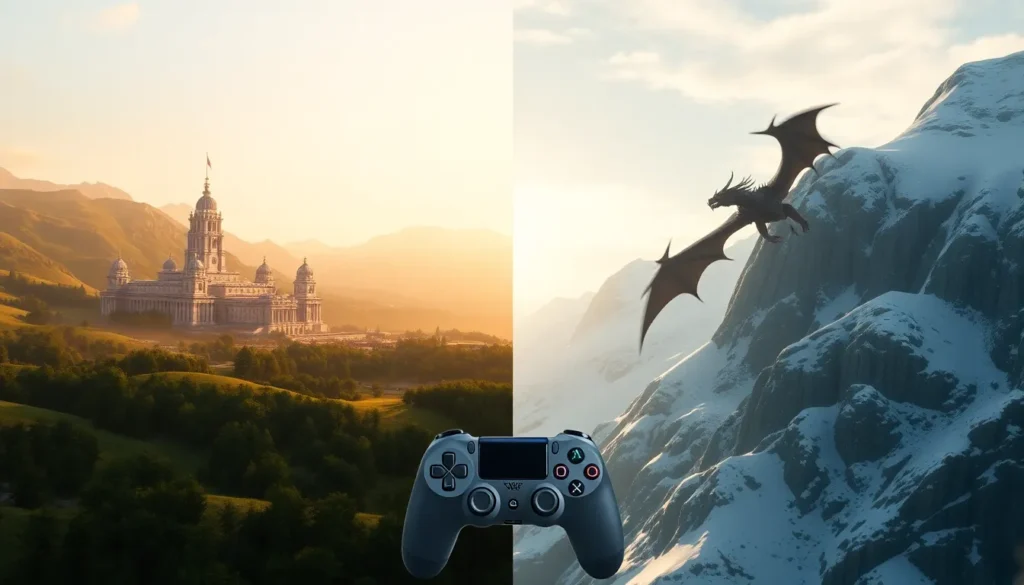
Comparing Oblivion vs Skyrim in world design reveals two different philosophies. Cyrodiil in Oblivion features rolling green hills, dense forests, and a classic fantasy aesthetic. The Imperial City stands at the center as a massive hub. Fast travel unlocks immediately to major cities, which some players appreciated and others criticized.
Skyrim’s province feels harsher and more varied. Snow-capped mountains dominate the northern regions. Ancient Nordic ruins dot the landscape. The environment tells stories through visual details, abandoned camps, skeletal remains, and environmental puzzles reward curious explorers.
Oblivion’s Oblivion Gates added a unique element. These portals to a hellish dimension appeared throughout Cyrodiil during the main quest. But, many players found the Gates repetitive after closing several. The red, rocky interiors blurred together.
Skyrim introduced dragons as roaming world events. These encounters felt more dynamic than Oblivion Gates. A dragon could attack any location at any time, creating memorable unscripted moments.
Dungeon design improved dramatically in Skyrim. Oblivion reused dungeon layouts frequently, making exploration feel repetitive. Skyrim’s dungeons each received individual attention. Most included shortcuts back to the entrance, a small quality-of-life feature that made a big difference.
Story and Quest Quality
Quest design sparks the most passionate debates in the Oblivion vs Skyrim discussion. Oblivion’s guild questlines remain legendary. The Dark Brotherhood storyline features twists, memorable characters, and a genuinely surprising climax. The Thieves Guild builds to a satisfying heist. Even smaller side quests showed creativity, one quest takes place entirely inside a painting.
Skyrim’s main quest delivers an epic dragon-slaying narrative. The Dragonborn concept gave players a stronger identity than Oblivion’s anonymous prisoner protagonist. But, many fans argue Skyrim’s guild questlines feel rushed. The Thieves Guild and Dark Brotherhood stories lack the build-up their Oblivion counterparts had.
Oblivion’s main story requires players to follow Martin Septim, a likeable NPC voiced by Sean Bean. The narrative positions the player as a helper rather than the central hero. Skyrim places the player firmly at the center of events as the prophesied Dragonborn.
Side quest variety also differs between games. Oblivion’s quests often feature unusual scenarios and moral choices. Skyrim includes more radiant quests, randomly generated tasks that can feel repetitive. “Another settlement needs your help” became a joke, but Skyrim’s radiant quests pioneered that direction.
The Shivering Isles expansion for Oblivion remains one of the best DLCs in RPG history. It added an entirely new landmass with bizarre creativity. Skyrim’s Dragonborn DLC came close but didn’t quite match that level of inventiveness.
Character Progression and Skills
Character building shows clear differences in the Oblivion vs Skyrim comparison. Oblivion used a class-based system. Players selected major skills at character creation, and only those skills contributed to leveling up. This created strategic depth but also potential pitfalls for uninformed players.
Skyrim abandoned classes entirely. Every skill contributes to character progression equally. This freedom let players experiment without penalty. Someone could start as a warrior and gradually become a mage without restarting.
The attribute systems differed too. Oblivion featured eight attributes like Strength, Intelligence, and Endurance. Raising these required careful skill management. Skyrim reduced attributes to three: Health, Magicka, and Stamina. Players simply choose one to increase at each level.
Perks represent Skyrim’s biggest addition to character progression. Each skill tree contains unique abilities that change gameplay. The archery tree includes a perk for zooming while aiming. The speech tree lets players bribe guards. These perks created distinct character builds.
Oblivion allowed more freedom in some areas. Birthsigns granted permanent bonuses chosen at character creation. Skyrim replaced these with Standing Stones that players could swap anytime. Some prefer Oblivion’s commitment: others appreciate Skyrim’s flexibility.
Both games feature a level scaling system where enemies grow stronger as players level up. Oblivion’s scaling was more aggressive, bandits eventually wore glass armor. Skyrim balanced this better, though high-level enemies could still become damage sponges.
Graphics and Modding Community
Visual quality in Oblivion vs Skyrim obviously favors the newer game. Skyrim launched five years later with updated technology. Its environments hold up reasonably well even today, especially the Special Edition remaster.
Oblivion’s graphics show their age. Character faces became infamous for their odd proportions. The “potato face” memes emerged from Oblivion’s unusual NPC designs. That said, the art direction in areas like the Shivering Isles remains impressive even though technical limitations.
Modding transforms both games dramatically. The Elder Scrolls modding community ranks among the most active in gaming. Thousands of mods exist for each title, adding new quests, improving graphics, and fixing bugs Bethesda never addressed.
Skyrim benefits from more recent mod tools and a larger modding population. Total conversion mods like Enderal created entirely new games using Skyrim’s engine. Graphics overhauls can make Skyrim look remarkably modern.
Oblivion mods still receive updates from dedicated creators. Graphics mods, quest additions, and gameplay overhauls keep the game fresh. Some mods even recreate Oblivion’s content within Skyrim’s engine.
Both games run on Bethesda’s Creation Engine (or its predecessor for Oblivion). This means both share similar bugs and quirks. Players familiar with one game will recognize physics glitches and NPC behavior oddities in the other.


